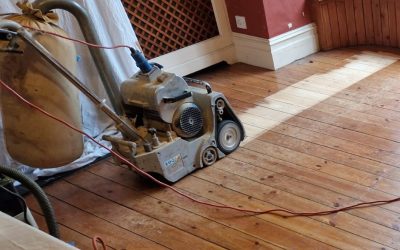


Worktop Refinishing to Transfrom Tired Wandsworth Kitchens
When your kitchen worktops are scratched, stained or looking tired, it can be tempting to rip everything out and start again. But for many homes in Wandsworth, there’s a smarter, more cost-effective option: professional worktop refinishing.
Done properly, refinishing can make a worn work surface look almost new again – without the disruption, expense and waste of full replacement. And when you use a specialist team like Floor Sanding Wandsworth, you’re getting the same level of care and craftsmanship that goes into their wood floor sanding in Wandsworth, brought onto your kitchen worktops.
In this in-depth guide, we’ll walk through everything you need to know about Worktop Refinishing in Wandsworth – from how it works and what it costs, to how long it lasts and how to keep your worktops looking good for years.
Why Choose Worktop Refinishing Instead of Replacing?
Before you start shopping for brand-new worktops, it’s worth asking a simple question: do your worktops actually need replacing – or just rescuing?
Refinishing is often the better choice because:
1. It’s far more cost-effective
Full replacement involves:
- New worktop materials
- Removal and disposal of old tops
- Possible adjustments to units or tiles
- Plumber and electrician visits if sinks and appliances are disturbed
By contrast, worktop refinishing focuses on restoring what you already have. There’s less labour, less waste and fewer trades involved – so your budget stretches much further.
2. Less disruption to your home life
Ripping out worktops can put your kitchen out of action for days. Refinishing is usually completed in a much shorter timeframe, and with careful planning you can often still access part of your kitchen while the work is carried out.
3. Keep the character you already love
Many homes in Wandsworth – from Victorian terraces to modern flats – have solid wood or high-quality laminate worktops that suit the property perfectly. Refinishing lets you refresh and protect that original character, rather than starting again with a style that may date quickly.
4. It’s kinder to the environment
Refinishing means fewer materials going to landfill and less new product being manufactured and transported. Choosing restoration over replacement is a simple way to reduce waste and make your home improvements more sustainable.

Which Types of Worktops Can Be Refinished?
A common question we hear from local homeowners is: “Can my worktops even be refinished?”
In many cases, the answer is yes – but the method used will depend on the material.
Solid wood worktops
These are ideal candidates for refinishing. Just as wood floor sanding and sealing can transform tired floorboards, careful sanding and finishing can bring solid wood worktops back to life.
Typical species we see in Wandsworth kitchens include:
- Oak
- Beech
- Walnut
- Iroko or other hardwoods
Engineered / veneered wood worktops
These have a real-wood top layer bonded to a stable core. They can often be refinished if there is enough veneer thickness to allow gentle sanding. A professional will assess this carefully before starting.
Laminate worktops
While laminates can’t be sanded in the same way as timber, specialist resurfacing and repair options may still improve their appearance – for example, filling minor chips, polishing out light scratching, and renewing sealant lines.
If you’re unsure, an experienced technician from Floor Sanding Wandsworth can inspect your kitchen and advise on the best approach.
Signs Your Worktops Are Ready for Refinishing
Not sure whether you need Worktop Refinishing in Wandsworth yet? Look out for:
- Scratches and knife marks that catch the light or feel rough to the touch
- Dull, patchy areas where the original oil, wax or lacquer has worn away
- Water marks or stains around sinks, kettles and dishwashers
- Burn marks from hot pans or trays
- Darkened areas and ingrained dirt that don’t respond to cleaning
- Raised grain or rough patches, especially on solid wood
If you spot any of these, refinishing can usually improve or even remove the damage entirely – especially if you tackle it sooner rather than later.

The Professional Worktop Refinishing Process (Step by Step)
A high-quality result depends on a clear, methodical process – much like professional floor sanding. Here’s what you can expect when you book specialist worktop refinishing in Wandsworth.
1. Inspection and preparation
First, your technician will:
- Assess the material and overall condition
- Identify problem areas (stains, burns, water damage, joint issues)
- Check for movement or gaps that may need filling
- Protect adjacent surfaces – cabinets, walls, splashbacks and floors
At this stage, they may also discuss finish options with you, such as natural oil, hardwax oil, or lacquer, depending on how you use your kitchen.
2. Cleaning and degreasing
Kitchens are full of grease, steam and everyday spills. Before any sanding work begins, the worktops are thoroughly cleaned and degreased. This crucial step ensures the abrasives can cut cleanly and that new finishes bond properly.
3. Dust-controlled sanding
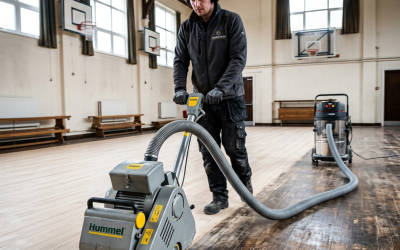
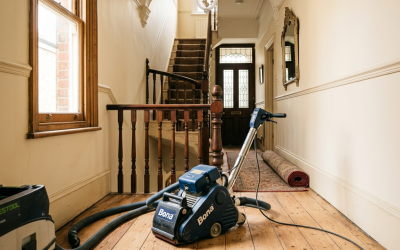
For solid timber or suitable engineered worktops, sanding removes the damaged top layer and levels the surface. A professional refinishing service will use dust-controlled sanding equipment, similar to that used for dust-free floor sanding in Wandsworth homes.
The process typically involves:
- Coarser abrasives to remove deeper scratches, stains and old finish
- Progressive sanding through finer grits to smooth the surface
- Hand-sanding edges, corners and around sinks for a consistent result
Effective dust extraction keeps your kitchen cleaner and reduces airborne particles.
4. Repairs and gap filling
Once the surface is clean timber, any defects are addressed:
- Small chips, dents and cracks are filled
- Open joints and edges can be sealed to reduce water ingress
- Severely damaged sections may be locally repaired or, in some cases, replaced
This is similar in principle to the gap filling and floorboard repairs carried out before floor finishing.
5. Applying the new finish
Now the worktops are ready to be protected. The choice of finish depends on your taste and lifestyle.
Common options include:
- Natural or tinted oils – penetrate into the timber for a warm, classic look; straightforward to refresh in future
- Hardwax oils – combine oil penetration with a tougher wax surface for improved durability and water resistance
- Clear lacquer – forms a hard protective film in high-traffic kitchens or busy family homes
Each coat is applied evenly, allowed to penetrate or dry as required, and then buffed or lightly sanded between coats for a smooth, even result.
6. Final checks and aftercare advice
Once the finish has cured, your technician will:
- Inspect the worktops for consistency and sheen
- Remove protective coverings and tidy the workspace
- Talk you through aftercare and maintenance – how soon you can use the worktops, what cleaning products to use, and when to plan a simple refresh

Choosing the Right Finish for Your Wandsworth Kitchen
Different homes – and different cooks – need different finishes. Here’s a quick comparison to help you decide.
Oil finishes
Best for:
- Traditional kitchens and period properties
- Homeowners who like a natural, matte or satin appearance
- People happy to carry out occasional re-oiling
Pros:
- Enhances natural grain and colour
- Easy to patch-repair and refresh
- Feels warm and pleasant to the touch
Things to note:
- Less resistant to standing water and harsh chemicals
- Usually needs a light top-up coat every 6–18 months, depending on usage
Hardwax oil
Best for:
- Busy family kitchens
- Open-plan spaces where worktops see a lot of use
- Homeowners wanting a balance of natural look and durability
Pros:
- Improved water and stain resistance vs standard oil
- Can usually be refreshed without full sanding
- Available in clear or slightly tinted versions
Things to note:
- Still benefits from sensible care (wiping spills quickly, using trivets and chopping boards)
Lacquer
Best for:
- Very high-traffic kitchens
- Rental properties where easy day-to-day cleaning is a priority
Pros:
- Tough, sealed surface
- Good resistance to spills and staining when maintained correctly
Things to note:
- If badly damaged, lacquered surfaces often require more intensive work to repair
- Doesn’t have quite the same “natural” feel as oil or hardwax oil
Your refinishing specialist will help you choose the most suitable system, just as they would when specifying finishes for hardwood floor sanding and sealing.

How Long Does Worktop Refinishing Take?
Every kitchen is different, but as a rough guide:
- Small to medium kitchens (e.g. a typical Wandsworth terrace): often 1 day for sanding and first coats, plus curing time
- Larger or more complex layouts: may extend into a second day for additional coats or repairs
Drying and curing times will vary depending on the finish used, temperature and ventilation. Your technician will advise when you can:
- Lightly use the worktops again
- Put appliances and heavier items back
- Clean and wipe down as normal
The key advantage over full replacement is that you’re not left without a functioning kitchen for long.
How Long Will Refinished Worktops Last?
With professional Worktop Refinishing in Wandsworth and proper aftercare, you can expect many years of service from your restored worktops. Lifespan depends on:
- The original worktop material
- The finish type and number of coats applied
- How heavily the kitchen is used
- How well simple maintenance routines are followed
The good news is that, just as floor sanding and refinishing can be repeated over the life of a wooden floor, solid wood worktops can generally be refinished again in future if they become tired or heavily marked.
Looking After Your Refinished Worktops
Once your worktops have been transformed, you’ll want to keep them looking their best. Follow these simple tips:
Everyday use
- Use chopping boards rather than cutting directly on the surface
- Always use trivets or heat-proof mats under hot pans and trays
- Wipe up spills promptly, especially liquids like wine, vinegar and oil
Cleaning
- Clean with a damp cloth and a mild, non-abrasive cleaner
- Avoid harsh chemicals, bleach or scouring pads
- Don’t allow water to pool for long periods, particularly around sinks and joints
Periodic maintenance
For oiled or hardwax oiled worktops:
- Consider a light maintenance coat once they start to look a bit dry or dull, especially in high-use zones
- Localised light sanding and re-oiling can tidy small problem areas without full refinishing
If you’re unsure, the team at Floor Sanding Wandsworth can advise on simple maintenance products and schedules, in the same way they support customers after wood floor restoration.

Can Worktop Refinishing Be Combined with Floor Sanding?
Absolutely – in fact, it often makes perfect sense. Many Wandsworth homeowners decide to refresh their wooden floors and kitchen worktops at the same time to achieve a complete transformation.
For example, your project might include:
- Wood floor sanding in Wandsworth living areas
- Parquet floor restoration in a hallway or dining room
- Kitchen worktop refinishing for a coordinated look
Using one experienced team for all of this work means:
- A consistent approach to dust control and protection
- Matching or complementary finishes throughout the ground floor
- One point of contact and a more efficient schedule

Common Questions About Worktop Refinishing in Wandsworth
Will refinishing remove all stains and burns?
Many marks – even quite severe ones – can be removed or greatly reduced by sanding. Deep burns or long-term water damage may leave faint traces, but these are often far less noticeable once the surface is smooth and freshly finished. A professional will be honest about what is realistically achievable before work begins.
Is it really dust-free?
No sanding system is 100% dust-free, but modern, professional equipment with powerful extraction keeps dust to a minimum. Companies experienced in dust-controlled floor sanding bring the same standard of cleanliness to their worktop projects, using sheeting, extraction and careful cleanup.
Can I choose a different colour or tone?
Yes – within reason. Tinted oils or stains applied before finishing can:
- Slightly darken or enrich the timber
- Warm up or cool down the colour
- Help tie in with newly refinished timber floors
Your technician can show sample boards so you can see how different options will look on similar timber.
Is refinishing suitable for rented properties?
Definitely. For landlords in Wandsworth, worktop refinishing offers a cost-effective way to smarten tired kitchens between tenancies without a full refurbishment. Pairing it with floor sanding in rental properties can significantly lift the overall feel of a flat or house.
Why Choose a Specialist Worktop & Floor Refinishing Company in Wandsworth?
You might be wondering whether to try a DIY kit or hire a professional. While small touch-ups are possible yourself, a full Worktop Refinishing in Wandsworth project is best left to experienced hands. Here’s why:
- Expert assessment – understanding your worktop material, thickness and condition prevents costly mistakes
- Professional-grade tools – better sanding machines, abrasives and dust extraction than most DIY options
- High-performance finishes – trade-only products, correctly applied, tend to last longer and protect better
- Consistent results – no patchy sanding, swirl marks or streaky finishes
- Time saved – what might take you a full weekend (or longer) is completed efficiently and correctly
The same skills that deliver top-quality floor sanding and polishing are directly applicable to detailed, careful work on kitchen worktops.
Ready to Restore Your Kitchen?
If your worktops are letting the rest of your kitchen down – scratched, stained or simply looking tired – you don’t have to live with them or pay for a full replacement.
Professional Worktop Refinishing in Wandsworth can:
- Refresh and protect solid wood surfaces
- Improve the look of engineered and some laminate worktops
- Extend the life of your existing kitchen
- Coordinate beautifully with refinished wooden floors
To discuss your kitchen, arrange a free quote or combine worktop refinishing with floor sanding services in Wandsworth, visit:
👉 floorsandingwandsworth.co.uk
Let an experienced local team restore your worktops – and bring the heart of your home back to life.