
Key Takeaways
- Osmo Hardwax Oil provides a breathable, natural finish ideal for kitchens and living areas.
- ‘Water popping’ is a professional technique used to ensure even oil penetration.
- Maintenance requires specialist pH-neutral cleaners to avoid stripping the protective wax.
- Curing times are highly dependent on UK humidity and ventilation.
The Problem: Stained and Lifeless Oak Floors
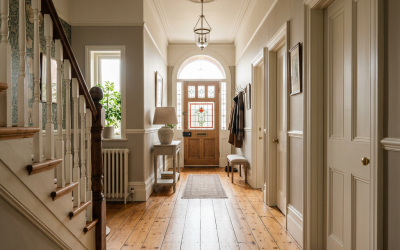
Oak floorboards are a staple of high-end UK interior design, but they are highly susceptible to liquid damage and ‘graying’ in high-traffic areas like kitchens. Standard lacquers can look ‘plastic’ and, once scratched, require a full sand to repair. Homeowners often find that their once-beautiful floors have lost their lustre, appearing dull and becoming difficult to clean. This is often due to the wrong cleaning products being used or a lack of regular wood floor maintenance.
The Agitation: The Pitfalls of DIY Oiling
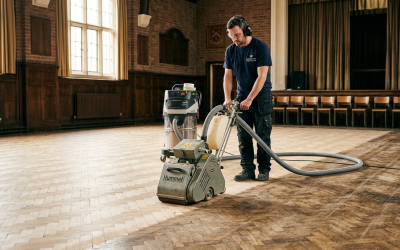
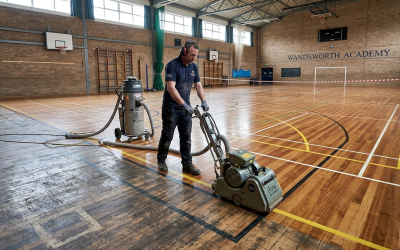
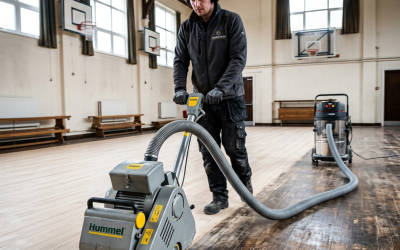
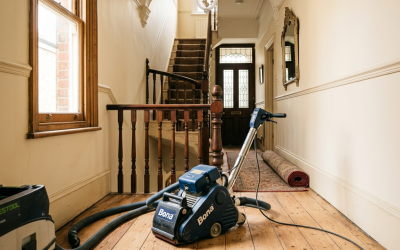
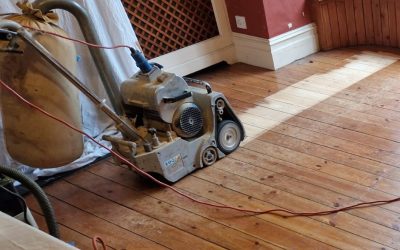
Many attempt to ‘refresh’ their floors with hardware-store oils. Without proper preparation, such as a professional buff with a Frank Spider or Festool sander, the new oil will not bond. This results in a sticky, uneven surface that attracts dust and dirt. Furthermore, applying oil in a typical UK kitchen with high humidity without understanding grain raising or tannin pull can lead to a splotchy, unprofessional finish that ruins the aesthetic of an expensive kitchen renovation.
The Solution: The Professional Hardwax Oil Process
At Floor Sanding Wandsworth, we recommend hardwax oil for its repairability and natural feel. Our process ensures the oil penetrates deep into the timber while providing a durable surface wax layer.
Pro-Tip: Water Popping and Grain Raising
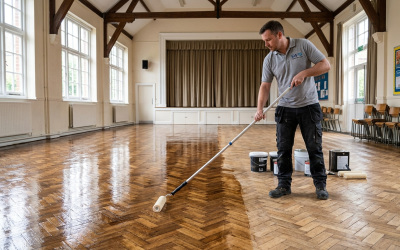
For a truly uniform finish, we often perform ‘water popping’. This involves lightly misting the sanded floor with distilled water to raise the grain before applying the oil. This opens the wood cells, allowing the Osmo Hardwax Oil to penetrate more deeply and evenly, especially on dense oak. It prevents the ‘blotchy’ look often seen in DIY projects. Once the water has dried—timing is crucial here based on room humidity—the oil is applied thinly and evenly.
Application and Curing in the UK Climate
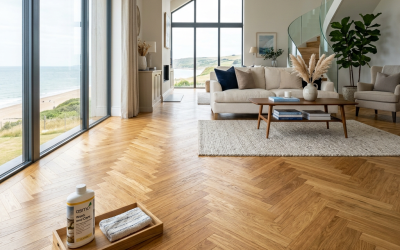
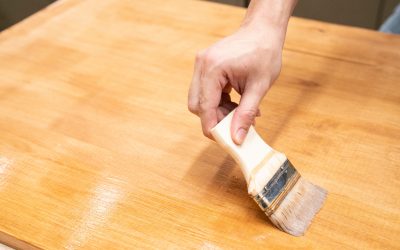
Osmo 3032 (Satin) or 3062 (Matte) are our preferred finishes. We apply two thin coats using a professional floor brush or a microfibre roller. In the UK, the curing time is typically 8-12 hours per coat, provided there is good ventilation. We advise clients that while the floor is ‘touch dry’ quickly, it takes up to 10 days to fully ‘cure’ and achieve its maximum chemical resistance. During this time, rugs should not be laid, and wet cleaning must be avoided.
Long-term care is simple if done correctly. Using Osmo Wash and Care (a pH-neutral soap) ensures the wax layer is not stripped away. For more tips on preservation, read our guide on wood floor maintenance or explore our specialist wood floor repairs service. Professional maintenance by experienced tradesmen can double the life of your floor finish.